Phoenix Concrete Slabs
Concrete Slabs & RV Pads in Phoenix, AZ
RV and trailer pads, shed and workshop slabs, garage floors and court slabs.
Phoenix Concrete Slabs
RV and trailer pads, shed and workshop slabs, garage floors and court slabs.
An RV pad has to hold a heavy, concentrated load that sits in one spot for weeks. That means a thicker slab, more reinforcement and a well-compacted base, plus a route from the street that the RV can actually turn into.
Shed, workshop and garage slabs have to be level and square so the building sits right. We set forms to the building's footprint and add thickened edges or footings when the structure needs them.
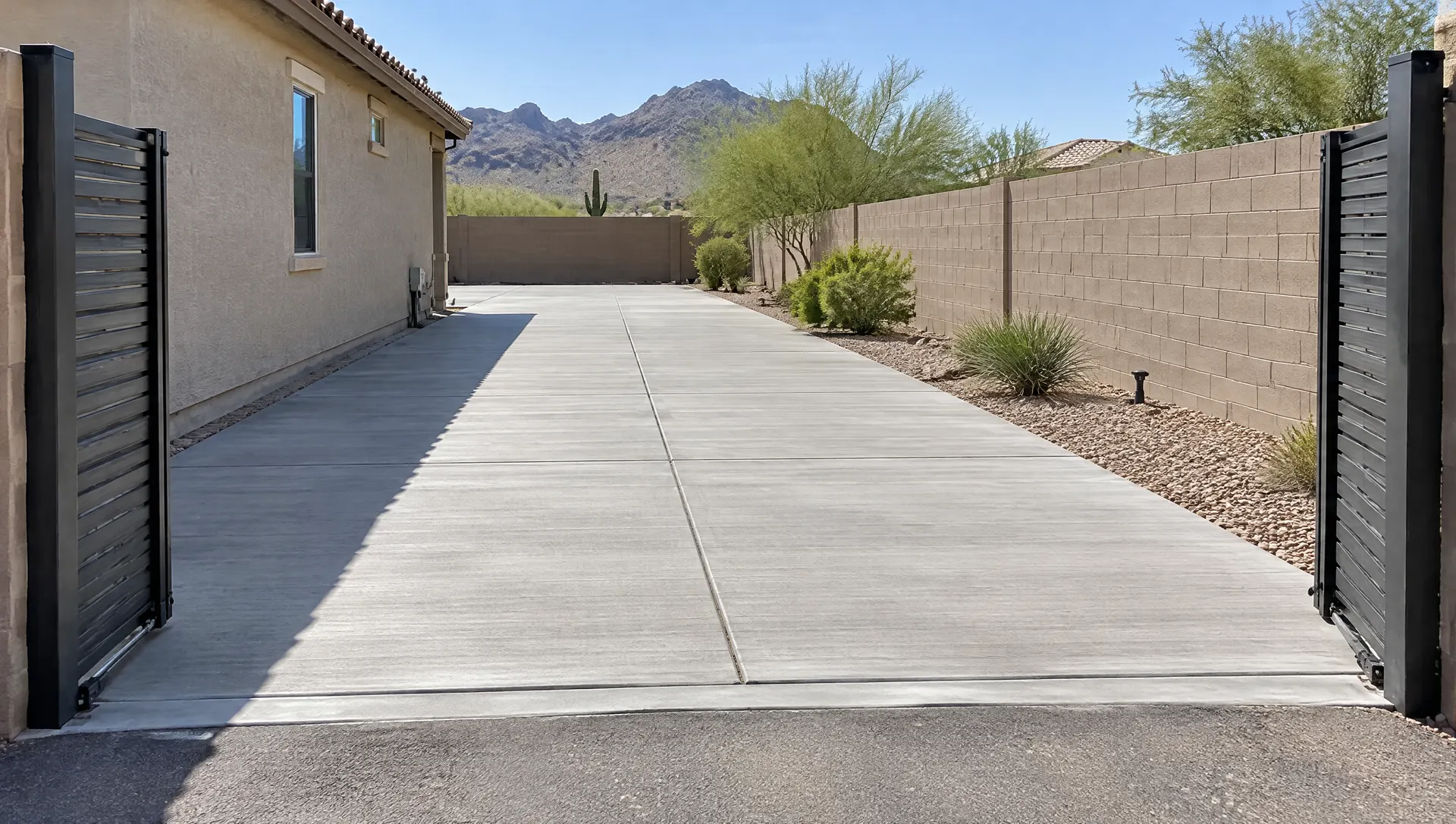
Side-yard RV pads often run through a gate and along a block wall, so we check gate width, wall footings and drainage before we set forms.
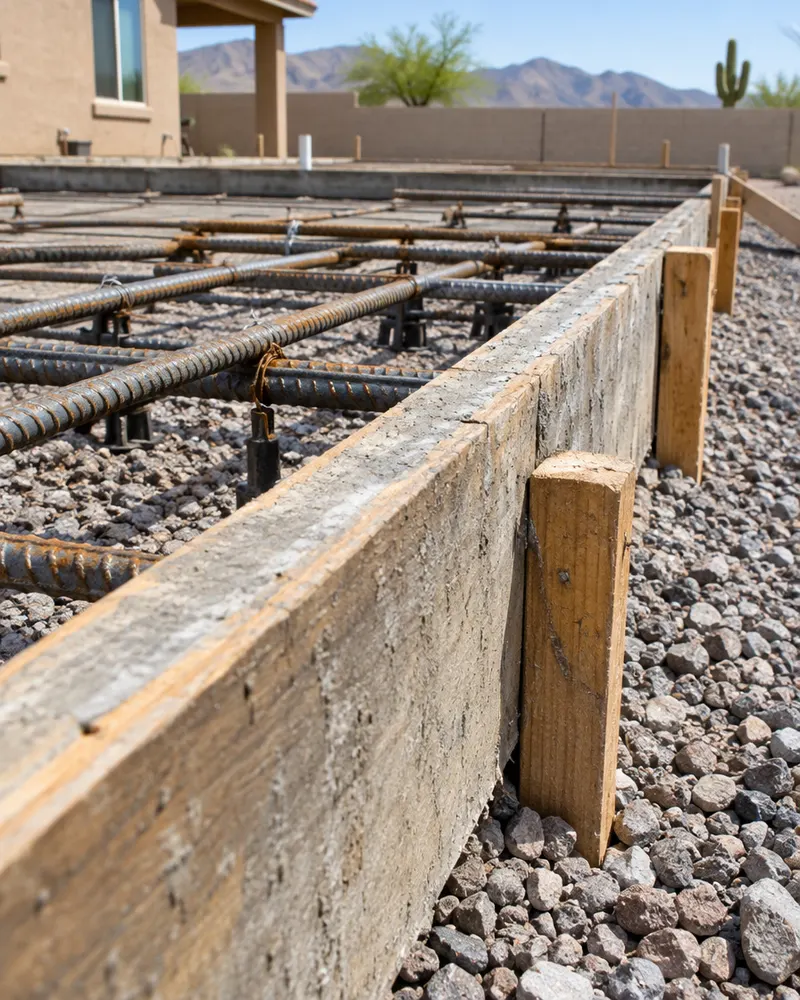
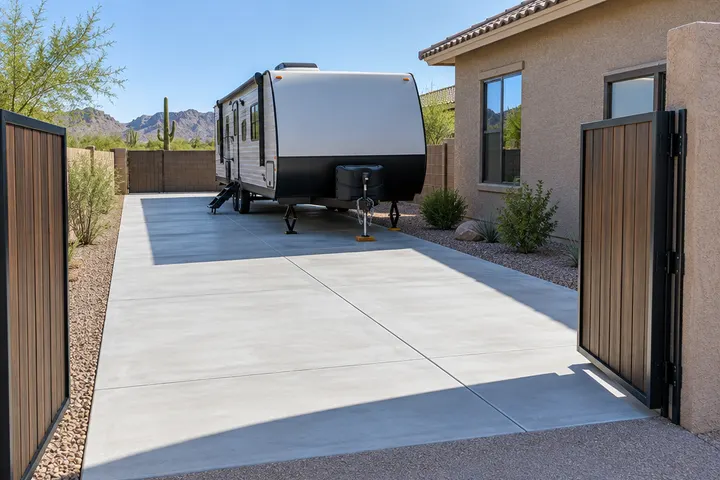
Thick, reinforced pads for motorhomes, trailers and boats.
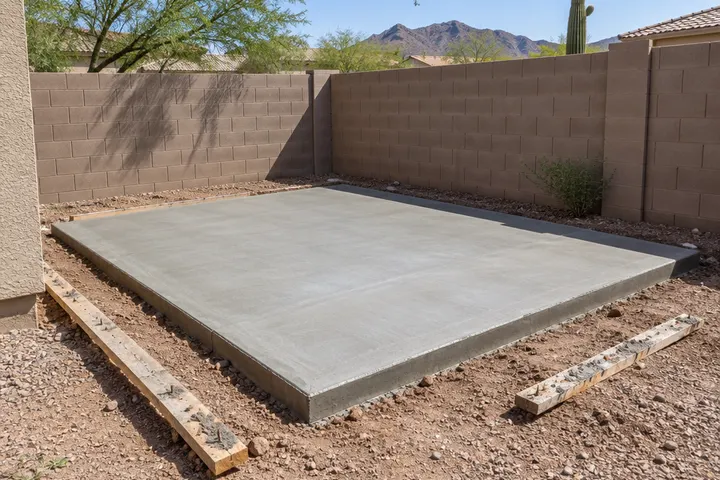
Level, square pads sized to the shed footprint.
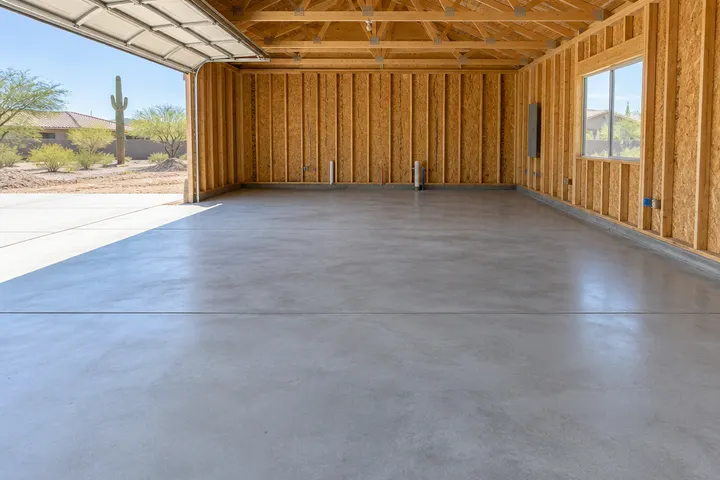
Interior slabs for detached garages and shops.
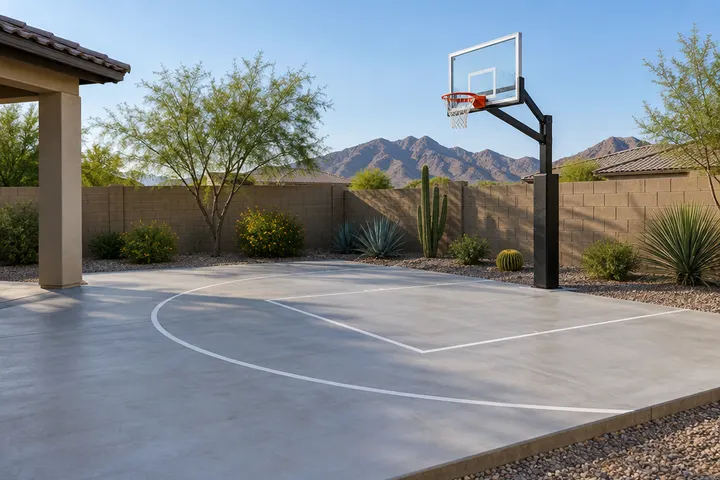
Smooth slabs for basketball and backyard games.
| Question | Why it matters |
|---|---|
| How heavy is the RV or trailer? | Sets the slab thickness and reinforcement |
| How will it get in? | Gate width, turning room and the curb cut |
| Where does water go? | The pad sheds rain toward the yard or street, not the house |
| Will it cross the right-of-way? | Phoenix's driveway rules may apply at the street |
Thicker than a patio, and set by the weight of what you'll park. We size the slab and steel to your RV or trailer.
The part on your lot usually doesn't need a driveway permit, but a new curb cut or a long section in the right-of-way can. We check your lot and the street.
Yes. Give us the shed's footprint and we form the slab to match.
If it can't, we use a concrete pump or another method. We check access during the estimate.
Tell us what you need to park or build on. We'll measure and size the slab.
Free estimate, no obligation